
For more information, please call our toll-free number: 📞 9898690612 For more information, please call our toll-free number: 📞 9898690612 For more information, please call our toll-free number: 📞 9898690612 For more information, please call our toll-free number: 📞 9898690612
Set Delivery Location

Use your current location to see accurate delivery estimates.

Or type your city
Loading...
Loading...

Category: Crop Protection

  • Weed Control in Soybean and Maize

    Weed Control in Soybean and Maize

    Weeds compete with young crops for light, water and nutrients. In soybean and maize, the early weeks after sowing are the most sensitive period, so weeds removed at that stage protect your yield the most.

    Why timing matters

    If weeds emerge with the crop and are left to grow, they can reduce yield noticeably. Weeds that appear much later usually cause less harm, but they can still add seed to the soil for next season.

    Methods that work together

    • Prepare a clean seedbed so that fewer weeds start with the crop.
    • Use a pre-emergence herbicide registered for your crop, applied soon after sowing on moist soil.
    • Hoe or inter-cultivate between rows in the early weeks.
    • Hand-weed patches that escape.
    • Rotate crops so that the same weeds do not return every year.

    Choosing a herbicide

    Herbicides are crop-specific. A product safe for maize may damage soybean and the other way round. Check the label for the crop, weed type (grass, broadleaf or sedge), growth stage and dose before buying.

    Application tips

    • Use a flat-fan nozzle and the recommended water volume for even cover.
    • Do not spray in strong wind to avoid drift onto nearby crops.
    • Do not mix products unless the label allows it.
    • Wash the sprayer thoroughly after use.

    Need help choosing? Browse our herbicides range or call or WhatsApp our team with your crop and the problem you are seeing.

    Know your weeds

    Weeds in soybean and maize fall into three broad groups: grasses (narrow leaves), broadleaf weeds and sedges. A herbicide that controls one group may not control another, so identifying weeds before choosing a product is the first step.

    The critical early period

    Crops are most sensitive to weed competition during the early weeks after sowing. Keeping the field clean through this window gives the crop a head start. Later weeds that appear under a well-grown canopy usually matter less, but should still be removed before they set seed.

    Integrated approach

    • Before sowing: prepare a fine seedbed and remove existing weeds.
    • At sowing: use certified, clean seed and proper row spacing.
    • Soon after sowing: apply a registered pre-emergence herbicide on moist soil if you choose chemical control.
    • Early growth: inter-culture or hoe between rows.
    • Later: spot hand-weeding and a good canopy to shade out late weeds.

    Common mistakes to avoid

    • Spraying a post-emergence product on the wrong crop stage.
    • Using a herbicide meant for maize on soybean or the other way around.
    • Spraying on dry soil when the label asks for moisture.
    • Ignoring sprayer calibration and applying too much or too little.
    • Letting weeds seed on field bunds.

    Frequently asked questions

    Can I mix two herbicides in one tank?

    Only if the label of both products allows it. Wrong mixtures can damage the crop or reduce control.

    How soon after sowing should I apply a pre-emergence herbicide?

    Follow the label, which usually gives a window of a few days after sowing, before weeds and crop emerge.

    Is hand weeding enough?

    It works well on small areas, but labour cost and timing are the limits on larger farms, which is why many farmers combine methods.

    This guide is for general awareness. Always read the product label, follow the dose and safety instructions printed on it, and check with your local agriculture officer or Krishi Vigyan Kendra before spraying.

  • Tomato Fruit Borer: What to Look For and When to Act

    Tomato Fruit Borer: What to Look For and When to Act

    Tomato fruit borer, caused by the larvae of a moth, is a major pest in tomato fields across India. A single larva can damage several fruits, so catching it early matters.

    Signs of fruit borer

    • Round entry holes on green or ripening fruit.
    • Droppings (frass) near the hole and rotting inside the fruit.
    • Chewed flowers and young leaves.
    • Small eggs laid singly on leaves, buds or flowers.

    Scouting

    Walk the field every few days, looking under leaves and inside flower clusters. Pheromone traps help you know when moths arrive so that you can plan your sprays and hand-picking.

    Practices that reduce damage

    • Install pheromone traps and replace lures on schedule.
    • Grow a border of marigold as a trap crop.
    • Pick and destroy damaged fruits and visible larvae.
    • Rotate with non-host crops and avoid growing tomato after tomato or chilli.
    • Keep the field free of weeds that shelter the pest.

    Wilt is a different problem

    If whole plants wilt even when the soil is moist, the cause is usually a soil-borne or bacterial disease and not the fruit borer. Check roots and the stem base before choosing any treatment.

    Using insecticides

    Use only products registered for tomato, respect the waiting period before harvest, and rotate insecticide groups. Spraying in the evening usually works better and is safer for beneficial insects.

    Need help choosing? Browse our insecticides range or call or WhatsApp our team with your crop and the problem you are seeing.

    The pest life cycle

    Moths lay single eggs on leaves, buds and flowers. Small larvae first feed on leaves and flowers and then bore into fruits, moving from one fruit to another as they grow. After feeding, they pupate in the soil near the plant. Several generations occur in a season in warm weather.

    Cultural methods that reduce pressure

    • Deep ploughing after harvest exposes pupae to sunlight and natural enemies.
    • Staking and training plants improves air flow and makes scouting easier.
    • Collect and destroy damaged fruits and fallen fruits away from the field.
    • Rotate with cereals or other non-host crops instead of tomato, chilli, okra, cotton or chickpea in the same plot.
    • Plant marigold rows as a trap crop and inspect them for eggs and larvae.

    Natural enemies

    Parasitic wasps and predators such as ladybird beetles help hold the pest in check. Spraying broad-spectrum products unnecessarily can remove these helpers, so spray only when scouting shows it is needed.

    Common mistakes to avoid

    • Confusing fruit borer damage with fruit rot or sunscald.
    • Spraying only the upper leaves and missing flowers and fruit clusters.
    • Using the same insecticide repeatedly.
    • Leaving rotten fruit lying in the field.

    Frequently asked questions

    Why do my tomatoes have round holes?

    A single round hole with droppings nearby usually points to a fruit borer larva. Cut open the fruit to confirm.

    Is bacterial wilt the same as fruit borer?

    No. Wilt affects the whole plant and is caused by soil-borne or bacterial pathogens, while fruit borer damages the fruit.

    Is it safe to eat damaged tomatoes?

    Remove damaged and rotting fruit. Only harvest after the waiting period shown on the label of any product you have sprayed.

    This guide is for general awareness. Always read the product label, follow the dose and safety instructions printed on it, and check with your local agriculture officer or Krishi Vigyan Kendra before spraying.
  • Rice Blast and Sheath Blight: Symptoms

    Rice Blast and Sheath Blight: Symptoms

    Rice blast and sheath blight are two common fungal diseases of paddy. Both can spread quickly in humid weather, so knowing the early symptoms helps you act before the whole field is affected.

    Rice blast symptoms

    • Diamond or spindle-shaped spots on leaves with a grey or whitish centre and a brown border.
    • Neck blast: the stalk just below the panicle turns dark and breaks, leaving empty or chaffy grains.
    • Spots on nodes that cause the stem to bend or snap.

    Sheath blight symptoms

    • Oval, greenish-grey lesions on the leaf sheath close to the water level.
    • Lesions that enlarge and join, moving up the plant in dense, humid crops.

    What favours these diseases

    Cool nights, high humidity, long leaf wetness, heavy nitrogen use and very dense planting all increase the risk. Fields near already infected plots are at higher risk.

    Prevention practices

    • Choose varieties suited to your area and treat seed before sowing.
    • Apply nitrogen in split doses instead of one heavy dose.
    • Maintain proper spacing so that air can move through the crop.
    • Remove weeds on bunds that can host the disease.
    • Destroy infected stubble after harvest.

    Using fungicides

    Fungicides work best when applied at the first sign of disease, not after it has spread. Use only products registered for rice, follow the label dose and timing, and rotate fungicide groups.

    Need help choosing? Browse our fungicides range or call or WhatsApp our team with your crop and the problem you are seeing.

    Management by crop stage

    • Nursery: use healthy seed, treat it before sowing and keep the nursery free of weeds and excess nitrogen.
    • Tillering: scout for leaf lesions; blast often starts on lower leaves in humid spells.
    • Booting to heading: this is the stage when neck blast can cause the most loss, so scout carefully after cloudy and humid days.
    • Grain filling: check for sheath lesions near the water line and for infected panicles.

    How to tell blast from other leaf spots

    Blast lesions are typically spindle or diamond shaped with a grey or whitish centre and a darker border. Brown spot lesions are smaller, oval and have dark brown dots. If you are unsure, take a leaf sample to your nearest Krishi Vigyan Kendra.

    Water and nutrient management

    • Split nitrogen into two or three doses instead of applying all of it at once.
    • Avoid prolonged standing water in dense fields during sheath blight pressure where your advisory allows drying spells.
    • Maintain potassium and silicon balance as advised for your soil, because well-fed plants cope better.

    Common mistakes to avoid

    • Spraying only after the field looks brown.
    • Applying very high nitrogen to make the crop look greener.
    • Leaving infected stubble and straw in the field.
    • Using the same fungicide group repeatedly.

    Frequently asked questions

    Is rice blast seed-borne?

    Yes, the fungus can survive on seed and crop residue, which is why healthy seed, seed treatment and clean fields matter.

    Can sheath blight be controlled with spacing alone?

    Wider spacing and balanced nitrogen reduce humidity inside the crop and slow the disease, but heavy infection may still need a registered fungicide.

    When is the best time to spray for neck blast?

    It depends on the variety and local weather, so follow the schedule given by your agriculture department or product label.

    This guide is for general awareness. Always read the product label, follow the dose and safety instructions printed on it, and check with your local agriculture officer or Krishi Vigyan Kendra before spraying.
  • How to Identify and Control Pink Bollworm in Cotton

    How to Identify and Control Pink Bollworm in Cotton

    Pink bollworm is one of the most damaging pests of cotton in India. The larvae live and feed inside flower buds and bolls, so by the time damage is visible, the pest is already protected from the outside. Early scouting is the best defence.

    How to identify pink bollworm

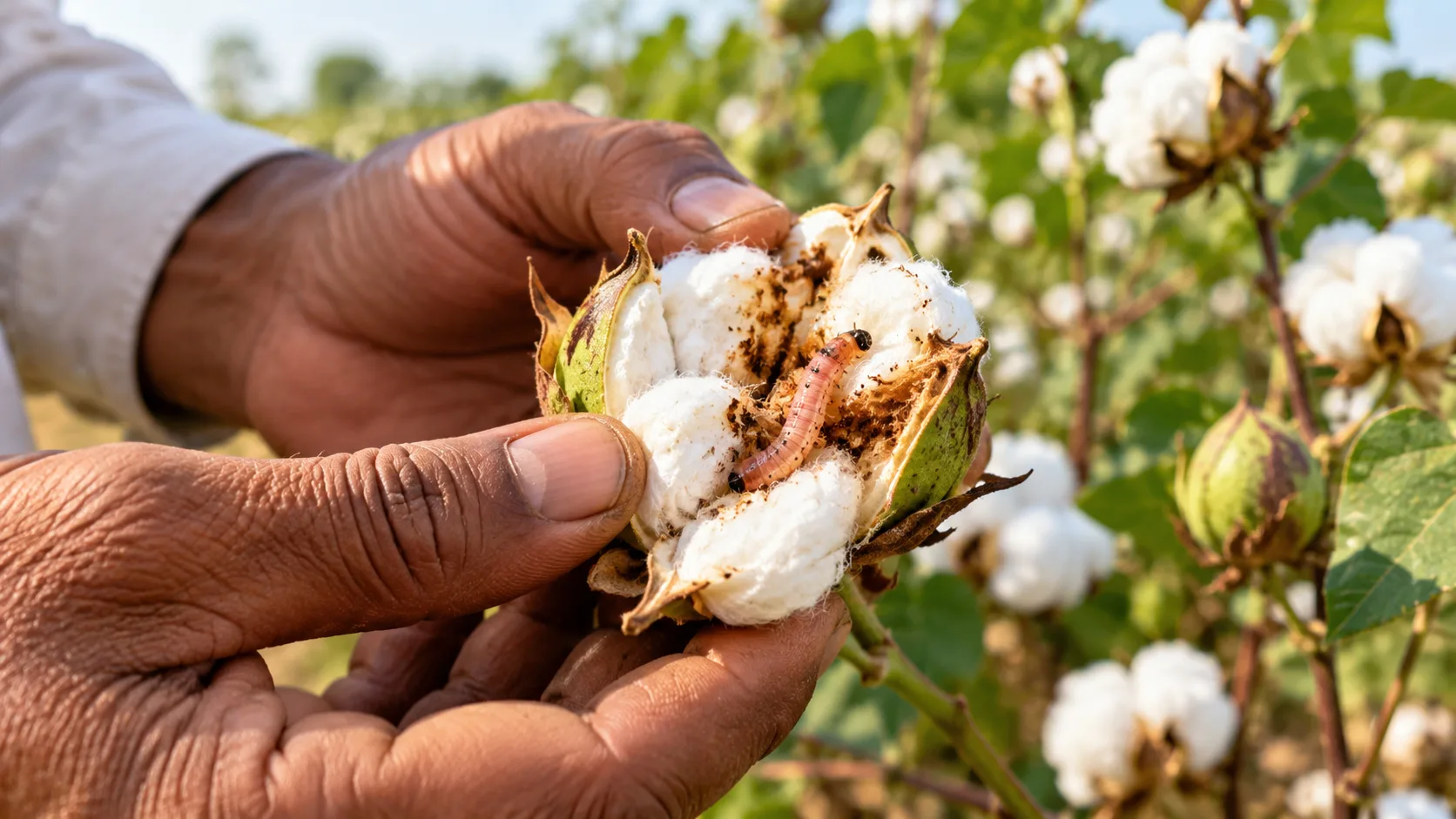
    • Small, pinkish larvae inside bolls, often with a darker head.
    • Flowers that stay twisted and do not open fully, called rosette flowers.
    • Tiny entry holes on bolls and stained or discoloured lint inside.
    • Seeds that are damaged or stuck together.

    Why it spreads

    Moths lay eggs on buds, flowers and young bolls. Long-duration crops, late sowing and leftover cotton stalks or unpicked bolls give the pest a place to survive and build up for the next season.

    Field practices that help

    • Sow on time and avoid very long-duration varieties in the same area.
    • Install pheromone traps from early flowering and check them every week.
    • Inspect green bolls and flowers regularly instead of waiting for visible damage.
    • Remove and destroy crop residue and fallen bolls after the final picking.
    • Keep ginning and storage areas clean so that larvae do not carry over.

    When to use insecticides

    Spray only when scouting or trap catches show the pest is present, and choose a product registered for cotton. Rotating between different insecticide groups slows resistance. Follow the label for dose, water volume and waiting period.

    Need help choosing? Browse our insecticides range or call or WhatsApp our team with your crop and the problem you are seeing.

    Life cycle: why the pest is hard to see

    The moth lays tiny eggs on buds, flowers and young bolls. After hatching, the larvae bore inside and feed hidden from view for around two weeks or more before they pupate inside the boll, in the seed or in the soil. Because several generations can develop in one season, numbers can rise quickly in a long-duration crop.

    Using pheromone traps

    Pheromone traps attract male moths and tell you when the pest has arrived in your field. Put the traps up at the start of flowering, keep them at crop height, replace lures on the schedule given by the supplier and note the catch every week. Your local agriculture department advisory will tell you how many traps to use per acre and the catch level at which action is needed.

    Common mistakes to avoid

    • Waiting until damage is visible on the outside of the boll.
    • Using the same insecticide group again and again.
    • Stacking cotton stalks near the field after the season, which lets the pest survive.
    • Leaving late unpicked bolls and allowing a second growth of the crop.
    • Ignoring neighbouring fields; the pest moves between plots.

    Frequently asked questions

    When should I start scouting for pink bollworm?

    Begin at squaring and early flowering, and continue until the last picking. Open some green bolls and look for larvae and damaged seeds.

    Does Bt cotton remove the problem?

    Resistance to Bt cotton has been reported in several regions of India, so monitoring, clean field practices and timely action are still needed.

    Can I identify it only by looking at the outside of the plant?

    Rosette flowers and tiny holes on bolls are clues, but the surest way is to open a few bolls and check inside.

    This guide is for general awareness. Always read the product label, follow the dose and safety instructions printed on it, and check with your local agriculture officer or Krishi Vigyan Kendra before spraying.
  • Fungal Diseases in Crops: Blast, Blight, Rust

    Fungal Diseases in Crops: Blast, Blight, Rust

    Quick answer: Fungal diseases such as rice blast, sheath blight, late blight, powdery mildew and rust spread fastest in humid, cloudy weather. Protect the crop with a preventive spray or spray at the very first symptoms, use contact and systemic fungicides in rotation, and never wait until leaves are already dead.

    Key takeaways

    • Fungicides work best as a preventive spray or at first symptoms; they cannot revive dead tissue.
    • Contact fungicides protect the leaf surface; systemic fungicides act inside the plant. Use both in rotation.
    • Seed treatment, balanced irrigation and clean fields reduce disease pressure before any spray.
    • Rotate fungicide groups so the fungus does not build resistance.

    Why do fungal diseases spread so fast?

    Cloudy weather, high humidity and warm nights are the perfect recipe for fungal diseases. Rice blast, sheath blight, late blight in potato and tomato, powdery mildew, downy mildew, rust and leaf spots can move from a few spots to an entire field within days. The biggest mistake is waiting until damage is obvious, because no fungicide can bring dead leaves back.

    How do I recognise common fungal diseases early?

    • Blast (paddy): diamond-shaped spots with a grey centre on leaves, and neck rot at panicle stage.
    • Sheath blight (paddy): oval greenish-grey lesions on the sheath near the water line.
    • Late and early blight (potato, tomato): water-soaked patches that turn brown, with white fungal growth underneath in humid weather.
    • Powdery mildew: white powdery coating on leaves and pods.
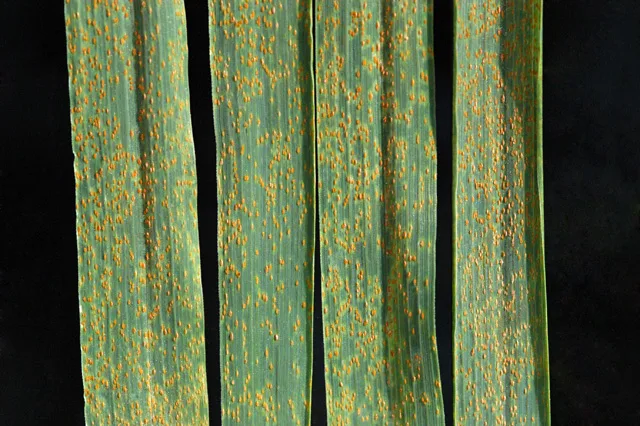
    • Rust and leaf spots: orange-brown pustules or round brown spots on leaves.

    Should I spray before or after the disease appears?

    Protect first, cure second. Contact fungicides form a protective layer on the leaf, while systemic fungicides move inside the plant and stop an infection that has already started. A good plan uses both, in rotation, starting at the right crop stage.

    Which fungicide is best for paddy?

    Product Active ingredient Best used for
    Try-Zole Tricyclazole 75% WP Leaf and neck blast
    Hexa Super Hexaconazole 5% + Validamycin 2.5% SC Sheath blight and other fungal diseases
    Voltage Validamycin 3% L Sheath blight

    Which fungicide is best for potato, tomato, grapes and vegetables?

    Product Active ingredient Best used for
    Metallic Metalaxyl 8% + Mancozeb 64% WP Late blight and downy mildew
    Mancoz 45 Mancozeb 75% WP Protective control of blights and leaf spots
    Promax 70 Propineb 70% WP Blights, downy mildew and leaf spots
    Green Copper Copper Oxychloride 50% WP Protective control of bacterial and fungal spots

    Which fungicide works for powdery mildew, rust, wheat and pulses?

    Product Active ingredient Best used for
    Sonata Sulphur 80% WDG Powdery mildew and mites
    Myclone Myclobutanil 10% WP Powdery mildew in grapes and vegetables
    Topper Difenoconazole 25% EC Leaf spots, rust and blights
    Vardan Propiconazole 25% EC Rust and leaf spots in cereals
    Victory Azoxystrobin 11% + Tebuconazole 18.3% SC Broad-spectrum protective and curative control
    Azoxy-Gold Azoxystrobin 18.2% + Difenoconazole 11.4% SC Broad-spectrum disease control with long protection
    Controller Tebuconazole 10% + Sulphur 65% WG Rust, powdery mildew and fruit diseases

    What practical steps reduce disease before spraying?

    • Treat seed with a fungicide before sowing and use disease-free seed.
    • Avoid overwatering and dense planting so leaves dry quickly.
    • Remove and destroy infected plant debris after harvest.
    • Rotate crops and rotate fungicide groups.
    • Spray in the morning or evening, covering both sides of the leaves.

    Is it safe to spray? Basic safety rules

    Always read the label first. Wear gloves, mask and full-sleeve clothes while spraying, never spray against the wind, keep products away from children, food and feed, and respect the waiting period before harvest. The dose and water volume on the product label (or your local agriculture officer’s advice) always come first. Rotate products with different modes of action instead of using the same one every time.

    Frequently asked questions

    Which fungicide is best for rice blast?

    Tricyclazole (Try-Zole) is commonly used for leaf and neck blast in paddy. Spray at the first symptoms or as a preventive spray at the stage given on the label.

    How do I control late blight in potato and tomato?

    Use a protective fungicide such as mancozeb (Mancoz 45) before the disease starts, and a combination such as metalaxyl + mancozeb (Metallic) when weather turns cool, cloudy and humid. Repeat only at the label interval.

    What is the difference between contact and systemic fungicides?

    Contact fungicides stay on the leaf surface and protect it from infection. Systemic fungicides are absorbed by the plant and can stop an infection that has already begun. Using both in rotation gives better and longer protection.

    Can I spray fungicide after the leaves have already dried up?

    No. Fungicides cannot revive dead tissue. They protect healthy parts and stop further spread, so spray early.

    How can I prevent powdery mildew?

    Avoid dense planting, keep the crop well aerated and spray sulphur (Sonata) or another suitable fungicide at the first white powdery spots.

    Where can I buy fungicides online?

    You can order genuine fungicides from Green Agro Mart with delivery to your farm. For dealer or large-farm quantities, use the bulk enquiry form.

    Need genuine fungicides for your farm or shop?

    Browse the full range of Green Agro Mart fungicides or send your requirement through the bulk enquiry form. Our team will call you back.

    Further reading: Challenges faced by farmers in crop production due to fungal pathogens and their effect on the Indian economy. This guide is general information; always follow the product label and local agriculture officer advice.

  • Weed Control in Paddy and Wheat: Herbicides Guide

    Weed Control in Paddy and Wheat: Herbicides Guide

    Quick answer: Weeds compete with your crop for water, nutrients and sunlight, and the first 30 to 45 days after sowing are the most critical. Identify whether your weeds are grasses, broadleaves or sedges, apply a pre-emergence herbicide within the first few days, and follow with a post-emergence spray at the 2 to 4 leaf stage of weeds if needed.

    Key takeaways

    • Timing matters more than dose: pre-emergence within 0 to 3 days of sowing or transplanting, post-emergence when weeds are young.
    • A product that kills grasses may not touch broadleaf weeds, so identify the weed first.
    • Use herbicides approved for your crop on the label and never spray non-selective products on the crop.
    • Use a separate sprayer and avoid drift to neighbouring fields.

    Why is weed control important for yield?

    Weeds do not attack like insects or show spots like diseases, so many farmers underestimate them. But weeds compete with your crop for water, nutrients, sunlight and space, and they are also hiding places for pests and diseases. In the early weeks even a small weed population can reduce yield noticeably, which is why weed control done at the right time is one of the cheapest ways to protect your income.

    What types of weeds should I look for?

    • Grasses (narrow leaf) such as Echinochloa (jungle rice), Phalaris minor and Cynodon (doob).
    • Broadleaf weeds such as Chenopodium (bathua), Convolvulus and Parthenium.
    • Sedges such as Cyperus (motha), common in wet paddy fields.

    When should I spray a herbicide?

    Use pre-emergence herbicides within 0 to 3 days of sowing or transplanting on moist soil so weeds never get started. Use post-emergence herbicides when weeds are young, usually at the 2 to 4 leaf stage. Late spraying on large weeds is costly and gives poor results.

    Which herbicide is best for paddy (rice)?

    Product Active ingredient Best used for
    Nexon Pretilachlor 50% EC Pre-emergence control of grasses, sedges and broadleaves in transplanted paddy
    Buta Max Butachlor 50% EC Early weed control in transplanted and direct-seeded paddy
    Bis-Gold Bispyribac Sodium 10% SC Post-emergence control of Echinochloa and other weeds in paddy

    Which herbicide is best for wheat?

    Product Active ingredient Best used for
    Pendi Super Pendimethalin 30% EC Pre-emergence control of grassy weeds and many broadleaf weeds
    Promise Metsulfuron Methyl 20% WP Post-emergence control of broadleaf weeds
    Fenoxa Fenoxaprop-P-Ethyl 9.3% EC Post-emergence control of grassy weeds like Phalaris minor

    What can I use in maize, soybean, groundnut, cotton and vegetables?

    Product Active ingredient Best used for
    Ultra-Zine Atrazine 50% WP Broad-spectrum weed control in maize and sugarcane
    Imaz-Super Imazethapyr 10% SL Weeds in soybean and groundnut
    Target Pro Quizalofop Ethyl 5% EC Grassy weeds in broadleaf crops
    Quit Quizalofop Ethyl 7.5% + Imazethapyr 15% EC Grasses and broadleaves together in soybean
    Cleaner 70 Metribuzin 70% WP Weed control in potato, tomato and soybean

    What can I use on bunds, fallow land and non-crop areas?

    Product Active ingredient Best used for
    Gly-Clear Glyphosate 41% SL Non-selective control of all green weeds in non-crop areas
    Glufo-Max Glufosinate Ammonium 13.5% SL Non-selective, quick-acting control of green weeds
    Weed Guard 2,4-D Amine Salt 58% SL Broadleaf weeds in cereals and sugarcane

    Always confirm on the label that a herbicide is suitable for your crop and stage. Do not spray non-selective herbicides on or near the crop.

    What is a simple weed-control plan?

    1. Prepare a clean seedbed and use certified, weed-free seed.
    2. Apply a pre-emergence herbicide within the first few days.
    3. Scout again at 20 to 25 days and spot-treat with a post-emergence product if needed.
    4. Use a flat-fan nozzle and a separate sprayer for herbicides, and avoid drift.

    Is it safe to spray? Basic safety rules

    Always read the label first. Wear gloves, mask and full-sleeve clothes while spraying, never spray against the wind, keep products away from children, food and feed, and respect the waiting period before harvest. The dose and water volume on the product label (or your local agriculture officer’s advice) always come first. Rotate products with different modes of action instead of using the same one every time.

    Frequently asked questions

    Which herbicide is best for paddy?

    Pretilachlor (Nexon) or butachlor (Buta Max) are commonly used as pre-emergence herbicides in paddy, and bispyribac sodium (Bis-Gold) as a post-emergence option. Follow the label for stage and dose.

    How do I control Phalaris minor (gulli danda) in wheat?

    Fenoxaprop-P-ethyl (Fenoxa) is commonly used after emergence against grassy weeds like Phalaris minor, and pendimethalin (Pendi Super) as a pre-emergence spray. Apply at the stage given on the label.

    What is the difference between pre-emergence and post-emergence herbicides?

    Pre-emergence herbicides are sprayed on moist soil before weeds come up and stop their germination. Post-emergence herbicides are sprayed on weeds that have already emerged, ideally at the 2 to 4 leaf stage.

    Can I use glyphosate in a standing crop?

    No. Glyphosate and other non-selective herbicides kill the crop too. Use them only on bunds, fallow land or non-crop areas, unless the label clearly allows a protected application.

    Should I spray herbicide before rain?

    Avoid it. Rain soon after spraying can wash the product off or move it away from the target. Choose a calm, dry day.

    Where can I buy herbicides online?

    You can order genuine herbicides from Green Agro Mart with delivery to your farm. For dealer or large-farm quantities, use the bulk enquiry form.

    Need genuine herbicides for your farm or shop?

    Browse the full range of Green Agro Mart herbicides or send your requirement through the bulk enquiry form. Our team will call you back.

    Further reading: Assessment of yield and economic losses in agriculture due to weeds in India. This guide is general information; always follow the product label and local agriculture officer advice.

  • Controlling Sucking Pests and Caterpillars in Crops

    Controlling Sucking Pests and Caterpillars in Crops

    Quick answer: Sucking pests (whitefly, aphids, jassids, thrips) and caterpillars (bollworm, armyworm, stem borer) are the most common insect problems in Indian crops. Scout the field twice a week, act at the first sign of damage, rotate insecticides with different modes of action and spray both sides of the leaf in the morning or evening.

    Key takeaways

    • Check the underside of leaves twice a week; early action costs far less than an outbreak.
    • Sucking pests spread virus diseases such as leaf curl and yellow mosaic, so control them before flowering.
    • Match the product to the pest: systemic insecticides for sucking pests, borer-specific products for caterpillars.
    • Never repeat the same active ingredient again and again; rotate groups to delay resistance.

    What are the main insect pests that damage crops?

    Insects are the number one worry of most farmers after sowing. They fall into two broad groups. Sucking pests such as whitefly, aphids, jassids (leafhoppers) and thrips drain sap from leaves and shoots. Chewing pests such as American bollworm, fall armyworm, fruit borer and stem borer eat leaves, buds, fruits and stems. Both groups multiply quickly in warm, humid weather, and one small patch can become a whole-field outbreak within days.

    How do I recognise insect damage early?

    • Curling, cupping or yellowing leaves and sticky honeydew with black sooty mould point to whitefly, aphids or jassids.
    • Silvery streaks and tip burn on leaves and flowers are a sign of thrips.
    • Holes in leaves, bored fruit or windowed leaves mean caterpillars. Look for green or brown droppings.
    • Dead heart in young plants (paddy, sugarcane, maize) shows stem borer attack.

    How do I control insect pests step by step?

    Step 1: Scout and use simple controls first. Walk the field twice a week and check the underside of leaves. Yellow sticky traps for whitefly, pheromone traps for moths, removing weeds around the field and a neem-based spray at the first sign keep numbers low. Spray chemical insecticides only when pests cross the economic threshold, not on a fixed calendar.

    Step 2: Choose the right product for the pest. See the tables below.

    Step 3: Rotate and spray smartly. Do not use the same active ingredient more than two times in a season, spray in the cool of the morning or evening, wet both sides of the leaves and keep bunds free of weeds that harbour pests.

    Which insecticide should I use for sucking pests?

    Product Active ingredient Best used for
    Challenger Thiamethoxam 25% WG Aphids, jassids, whitefly, thrips; quick systemic action
    Emida 70 Imidacloprid 70% WG Sucking pests, hoppers and termites in many crops
    Unic Flonicamid 50% WG Aphids, jassids and whitefly with fast feeding stop
    Elegant Pymetrozine 50% WG Brown planthopper in paddy, aphids and whitefly
    Defender Diafenthiuron 47.8% SC Whitefly, mites and jassids in cotton and vegetables
    Spark Acetamiprid 20% SP Aphids, jassids and whitefly
    Neem Gold Azadirachtin (neem based) EC Preventive and low-residue option for soft-bodied pests

    Which insecticide should I use for caterpillars and borers?

    Product Active ingredient Best used for
    Steller Chlorantraniliprole 18.5% SC Stem borer, fruit borer, armyworm and leaf folder
    Agni Flubendiamide 20% WG Bollworms and fruit borers in cotton, pulses and vegetables
    Finisher Emamectin Benzoate 1.9% EC Young caterpillars on vegetables, cotton and pulses
    Indox Indoxacarb 14.5% SC Heliothis, diamondback moth and armyworm
    Wanted Spinosad 45% SC Thrips and caterpillars in vegetables and fruits
    Mission Chlorantraniliprole 8.8% + Thiamethoxam 17.5% SC Two-in-one for borers plus sucking pests

    Protect seedlings from the start with seed treatment such as Thioxam (Thiamethoxam 30% FS) where the label allows.

    Is it safe to spray? Basic safety rules

    Always read the label first. Wear gloves, mask and full-sleeve clothes while spraying, never spray against the wind, keep products away from children, food and feed, and respect the waiting period before harvest. The dose and water volume on the product label (or your local agriculture officer’s advice) always come first. Rotate products with different modes of action instead of using the same one every time.

    Frequently asked questions

    What is the best insecticide for whitefly and aphids?

    Systemic options such as thiamethoxam (Challenger), flonicamid (Unic) or pymetrozine (Elegant) are commonly used for whitefly and aphids. Choose according to your crop and the product label, and rotate between groups.

    How do I control caterpillars and armyworm in my field?

    Check the crop early, because young larvae are easiest to kill. Products such as chlorantraniliprole (Steller) or emamectin benzoate (Finisher) are commonly used; spray in the evening and cover the whorl or the underside of leaves as the label advises.

    How often should I spray insecticide?

    Spray only when pest numbers cross the threshold, not by the calendar. If a repeat spray is needed, follow the interval on the label and switch to a different active ingredient.

    Can I mix two insecticides in one tank?

    Tank mixing is possible with some products, but only when the label allows it. Always do a small jar test first and never mix with strongly alkaline products unless advised.

    Are neem-based products effective?

    Neem-based products such as Neem Gold work well as a preventive or low-residue option for soft-bodied pests, but they act more slowly than chemical insecticides, so start early.

    Where can I buy genuine insecticides online?

    You can order genuine insecticides from Green Agro Mart with delivery to your farm. For dealer or large-farm quantities, use the bulk enquiry form.

    Need genuine insecticides for your farm or shop?

    Browse the full range of Green Agro Mart insecticides or send your requirement through the bulk enquiry form. Our team will call you back.

    Further reading: Crop losses due to insect pests in Indian agriculture: An update. This guide is general information; always follow the product label and local agriculture officer advice.

Login / Sign Up

Enter your mobile number to continue — no email needed.

+91

We only use your mobile number. No email or password required.

Just a few details to set up your farmer profile. No email needed.

🌱
Green Agro Mart
Typically replies in a few minutes
Hi there! Welcome to Green Agro Mart. How can we help you today?