For more information, please call our toll-free number: 📞 9898690612 For more information, please call our toll-free number: 📞 9898690612 For more information, please call our toll-free number: 📞 9898690612 For more information, please call our toll-free number: 📞 9898690612
Set Delivery Location

Use your current location to see accurate delivery estimates.

Or type your city
Loading...
Loading...

Category: Crop Protection

  • Purple Blotch in Onion: Symptoms and Prevention

    Purple Blotch in Onion: Symptoms and Prevention

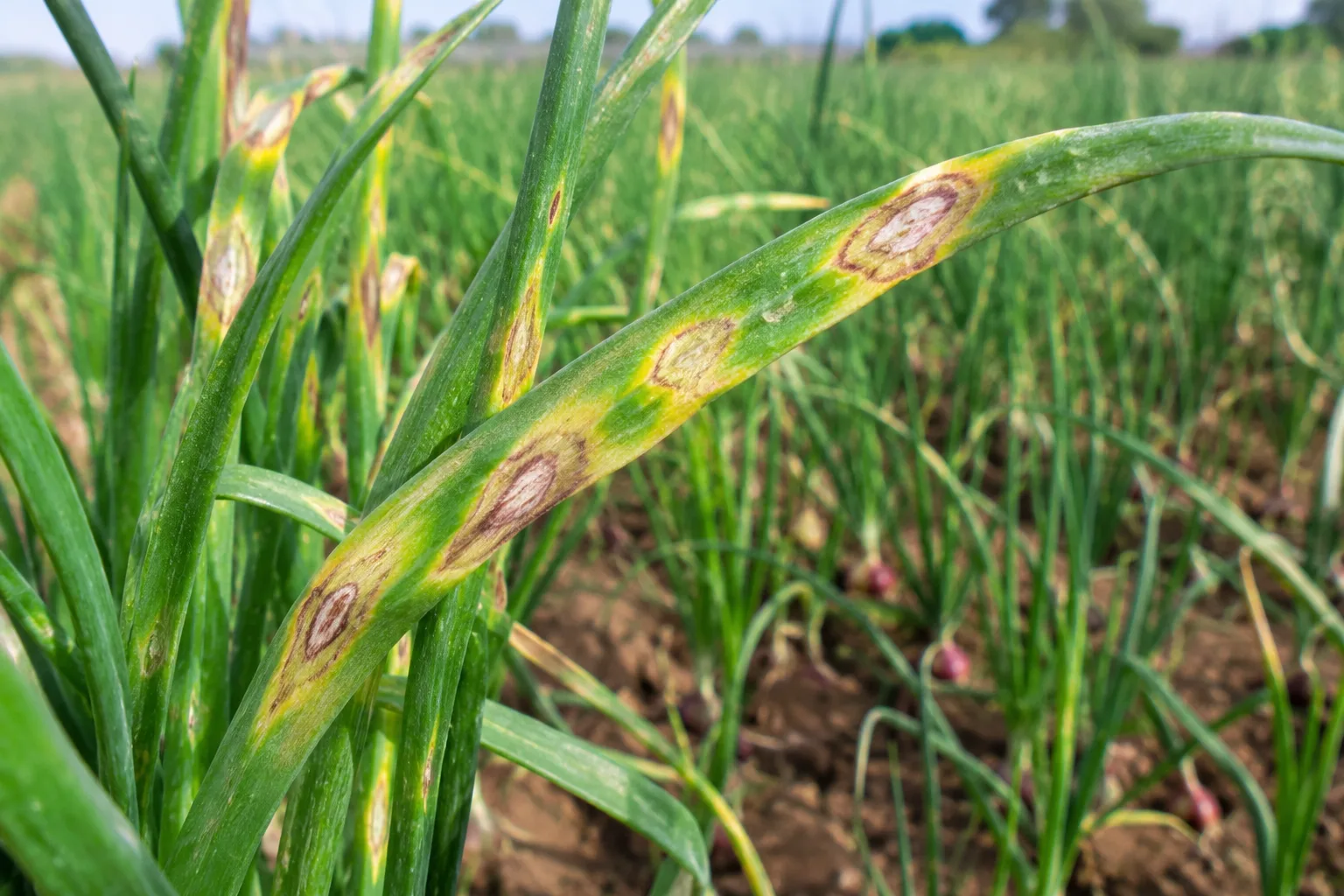
    Quick answer: Purple blotch is a fungal leaf disease of onion that spreads fast in humid weather. Scouting, good drainage and a label-recommended fungicide at first symptoms help.

    Purple blotch causes spots on onion leaves and stalks. High humidity and long leaf wetness help it spread.

    Symptoms

    • Small, sunken whitish spots that enlarge and turn purplish-brown
    • Yellow edges around the spots
    • Leaves drying and collapsing

    When it spreads

    The disease spreads fastest in humid weather, after rain or heavy dew, when leaves stay wet for a long time, and in dense crops.

    Prevention

    • Keep drainage good
    • Avoid planting too densely
    • Scout regularly and remove affected leaves
    • Remove crop residue after harvest

    At the first symptoms, apply a fungicide as per the label.

    Need help choosing the right product? Call the Green Agro Mart expert on +91 96874 75106. Cash on delivery and home delivery are available.

    Read more: Onion crop guide.

    Frequently asked questions

    What is purple blotch?

    A fungal disease of onion leaves that causes spots which grow and turn purplish-brown.

    When does purple blotch spread most?

    In humid weather, after rain or dew, when leaves stay wet for long periods.

    When should I apply a fungicide?

    At the first symptoms or when weather favours the disease, as per the label.

  • Leaf Curl in Chilli: Controlling Thrips and Mites

    Leaf Curl in Chilli: Controlling Thrips and Mites

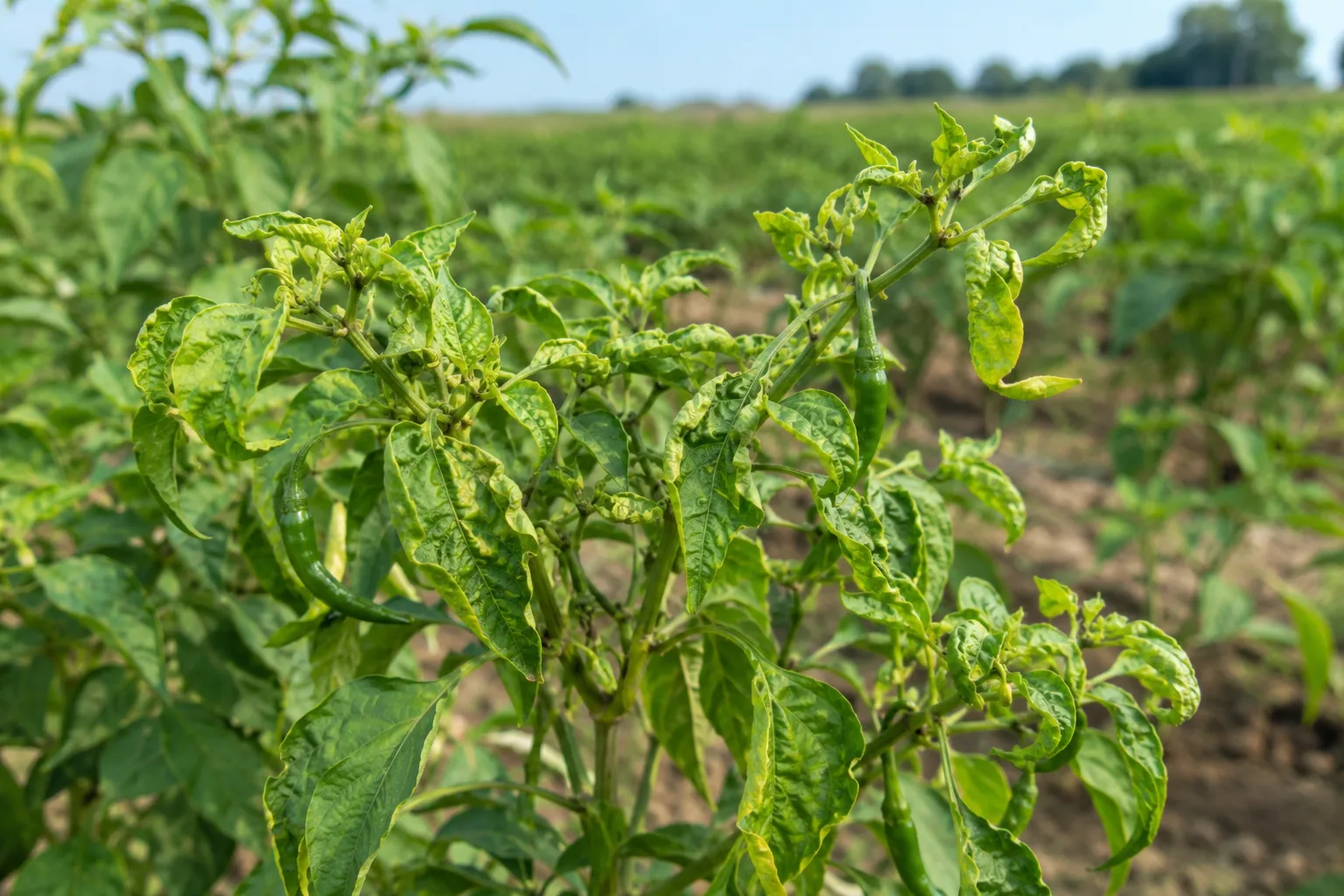
    Quick answer: Upward leaf curl in chilli is often a sign of thrips or mite damage. Scout regularly and use an insecticide or miticide as per the label.

    Leaf curl is a common problem in chilli. The leaves curl, and new growth slows down.

    Identifying thrips and mites

    Thrips are tiny, slender insects that scrape the leaf surface and feed on the sap. Mites are even smaller and are hard to see with the naked eye. Both can make leaves curl upward and turn rough.

    Symptoms

    • Leaves curling upward
    • Small, rough leaves
    • Fewer flowers and fruits

    Prevention and control

    • Scout regularly, especially the young leaves
    • Keep the field clean
    • Identify the pest correctly, because thrips and mites need different products

    Once you know the pest, choose an insecticide as per the label. If you are not sure, ask an expert.

    Need help choosing the right product? Call the Green Agro Mart expert on +91 96874 75106. Cash on delivery and home delivery are available.

    Read more: Chilli crop guide.

    Frequently asked questions

    Why do chilli leaves curl?

    Often because of thrips or mites. Viruses can also cause it, so correct identification matters.

    What is the difference between thrips and mites?

    Thrips are slender insects you can usually see. Mites are very tiny and hard to spot without close inspection.

    Does one product work on both?

    Not always. Check the label to see which pest the product is meant for.

  • Yellow Mosaic Virus in Soybean: Symptoms and Prevention

    Yellow Mosaic Virus in Soybean: Symptoms and Prevention

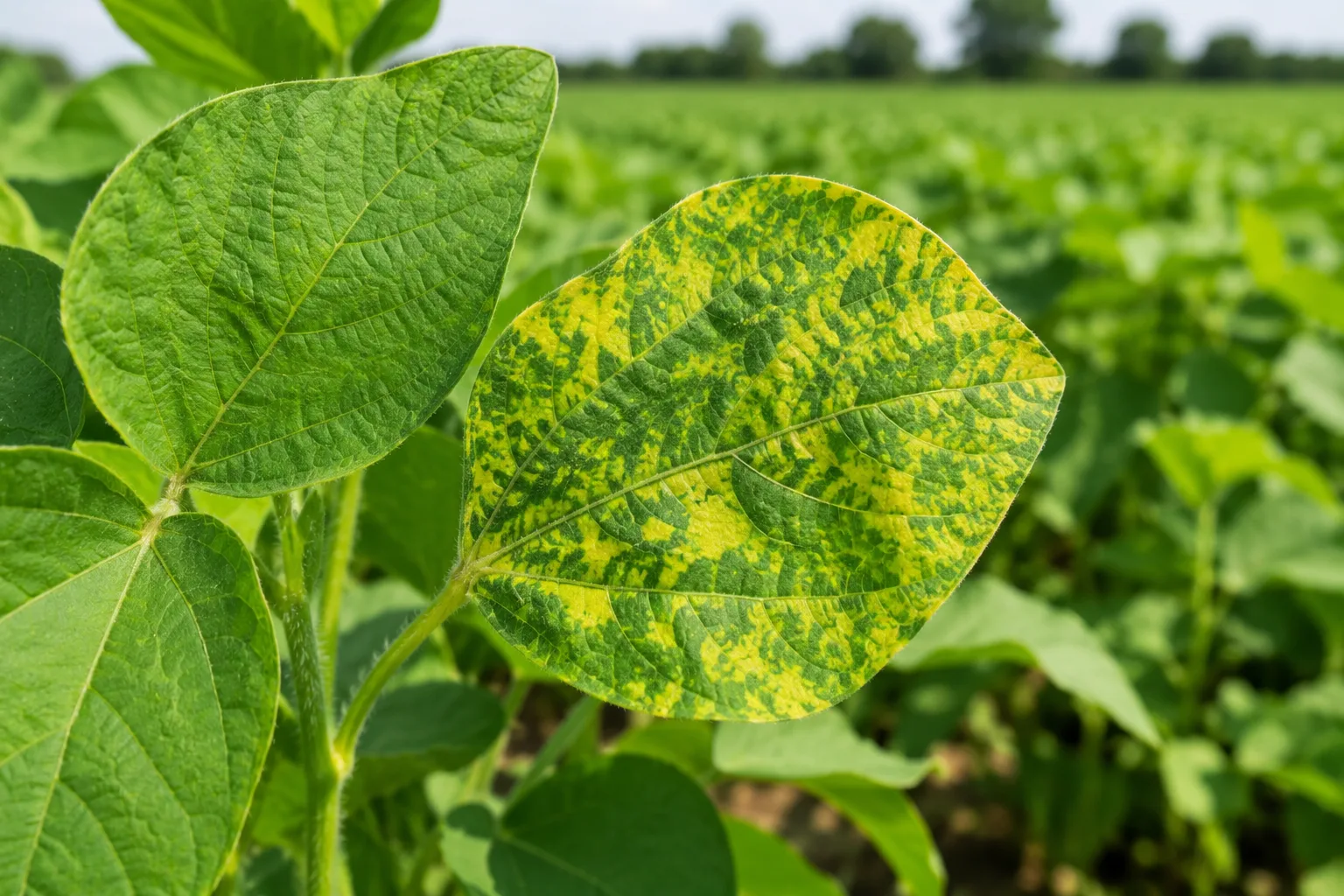
    Quick answer: Yellow mosaic virus is a common soybean disease spread by whitefly. Infected plants cannot be cured, so scouting for whitefly and early prevention matter most.

    Yellow mosaic virus causes yellow and green patches on soybean leaves. Whiteflies carry the virus from plant to plant.

    Symptoms

    • Yellow and green mosaic patches on leaves
    • Stunted plants
    • Fewer and poorly filled pods

    Prevention

    • Scout the field and remove infected plants as soon as you see them
    • Keep field borders free of weeds
    • Watch whitefly numbers
    • Choose seed varieties as per local advice

    Controlling whitefly

    Since whitefly spreads the virus, a label-recommended insecticide can be used to control it. Acting before the virus appears works better than acting after.

    Need help choosing the right product? Call the Green Agro Mart expert on +91 96874 75106. Cash on delivery and home delivery are available.

    Read more: Soybean crop guide.

    Frequently asked questions

    Can yellow mosaic virus be cured?

    No. Infected plants do not recover, so prevention, scouting and whitefly control are important.

    How does the disease spread?

    Whiteflies feed on an infected plant and then carry the virus to healthy plants.

    Will a fungicide help?

    No. This is a viral disease, not a fungal one, so a fungicide does not act on it.

  • Whitefly in Cotton: How to Identify and Control It

    Whitefly in Cotton: How to Identify and Control It

    Quick answer: Whitefly sucks sap from cotton leaves, weakens the plant and can spread viruses. Regular scouting, clean fields and a label-recommended insecticide help keep it under control.

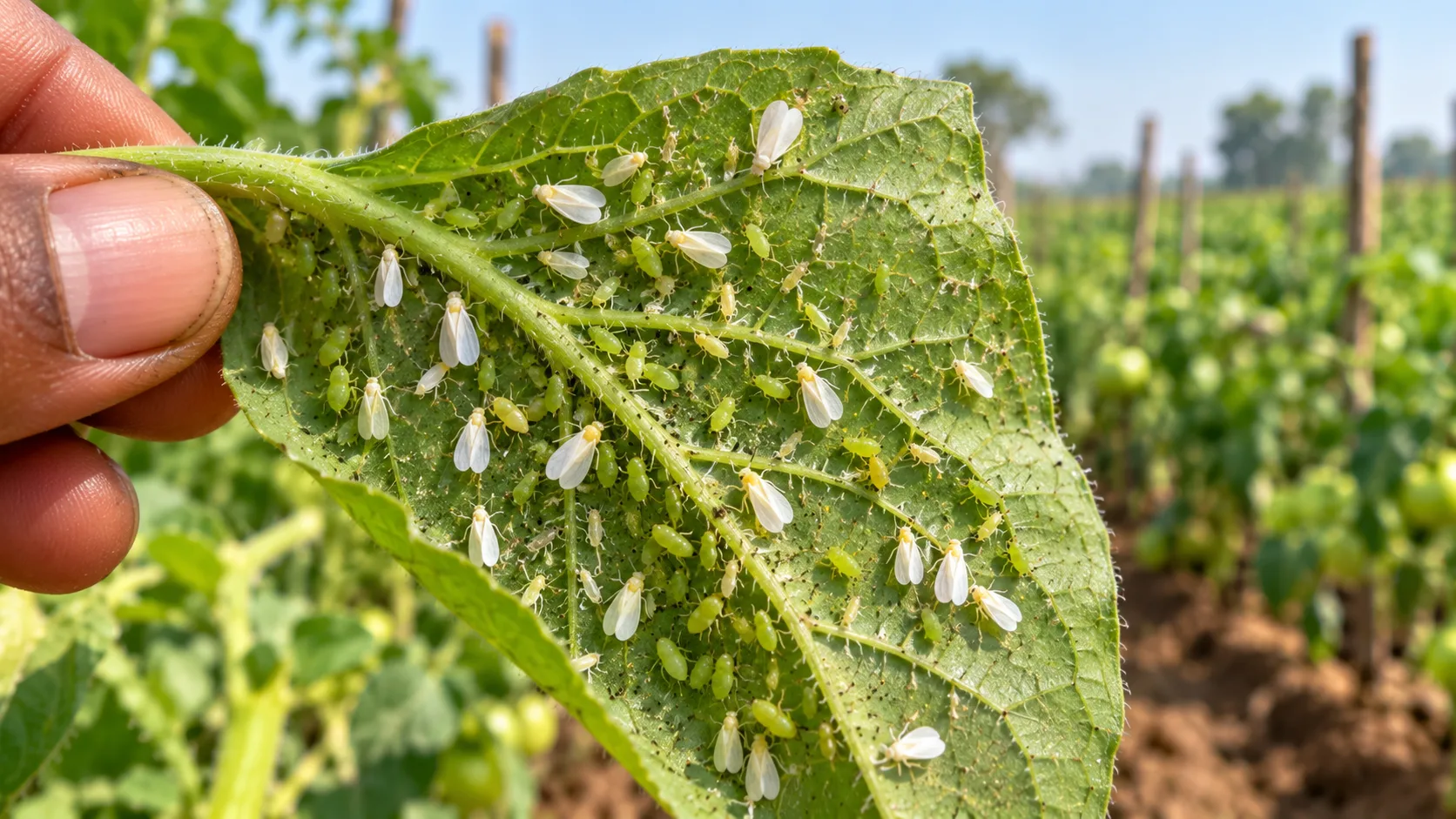
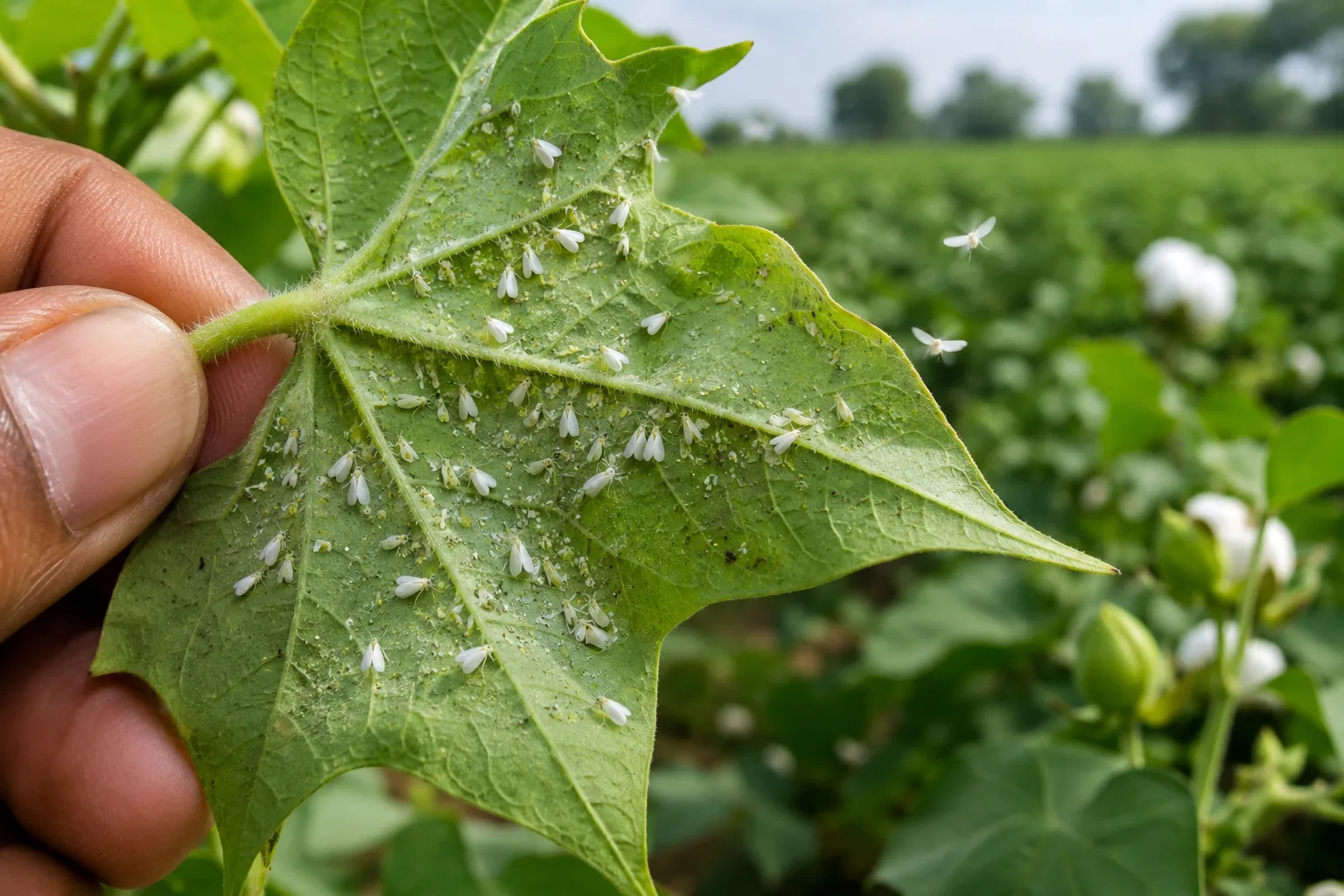
    Whitefly is a common problem in cotton. These tiny white insects live on the underside of leaves, and their sap feeding can slow plant growth.

    How to identify whitefly

    Look under the leaves for small white flying insects. They rise in a cloud when you shake the plant. Leaves may also show a sticky coating and black sooty mould.

    Signs of damage

    • Yellow, curled or crinkled leaves
    • Stunted plant growth
    • Sticky honeydew and black mould on leaves

    Practices that help

    • Scout fields regularly, especially the underside of leaves
    • Remove weeds around the field
    • Avoid excess nitrogen fertiliser
    • Use yellow sticky traps to monitor insect numbers

    Using insecticides

    When numbers build up, choose an insecticide made for sucking pests and apply it as per the label. Follow the pack instructions for dose and timing, and do not use the same product again and again.

    Need help choosing the right product? Call the Green Agro Mart expert on +91 96874 75106. Cash on delivery and home delivery are available.

    Read more: Cotton crop guide.

    Frequently asked questions

    How does whitefly damage cotton?

    It sucks sap from the leaves, which can turn them yellow or curled and slow plant growth. Some whiteflies also spread viruses.

    When should I spray for whitefly?

    When scouting shows numbers building up, preferably early morning or evening, and as per the product label.

    Will an insecticide alone remove whitefly?

    No. Regular scouting, field hygiene and balanced fertiliser matter too. The insecticide works best alongside these practices.

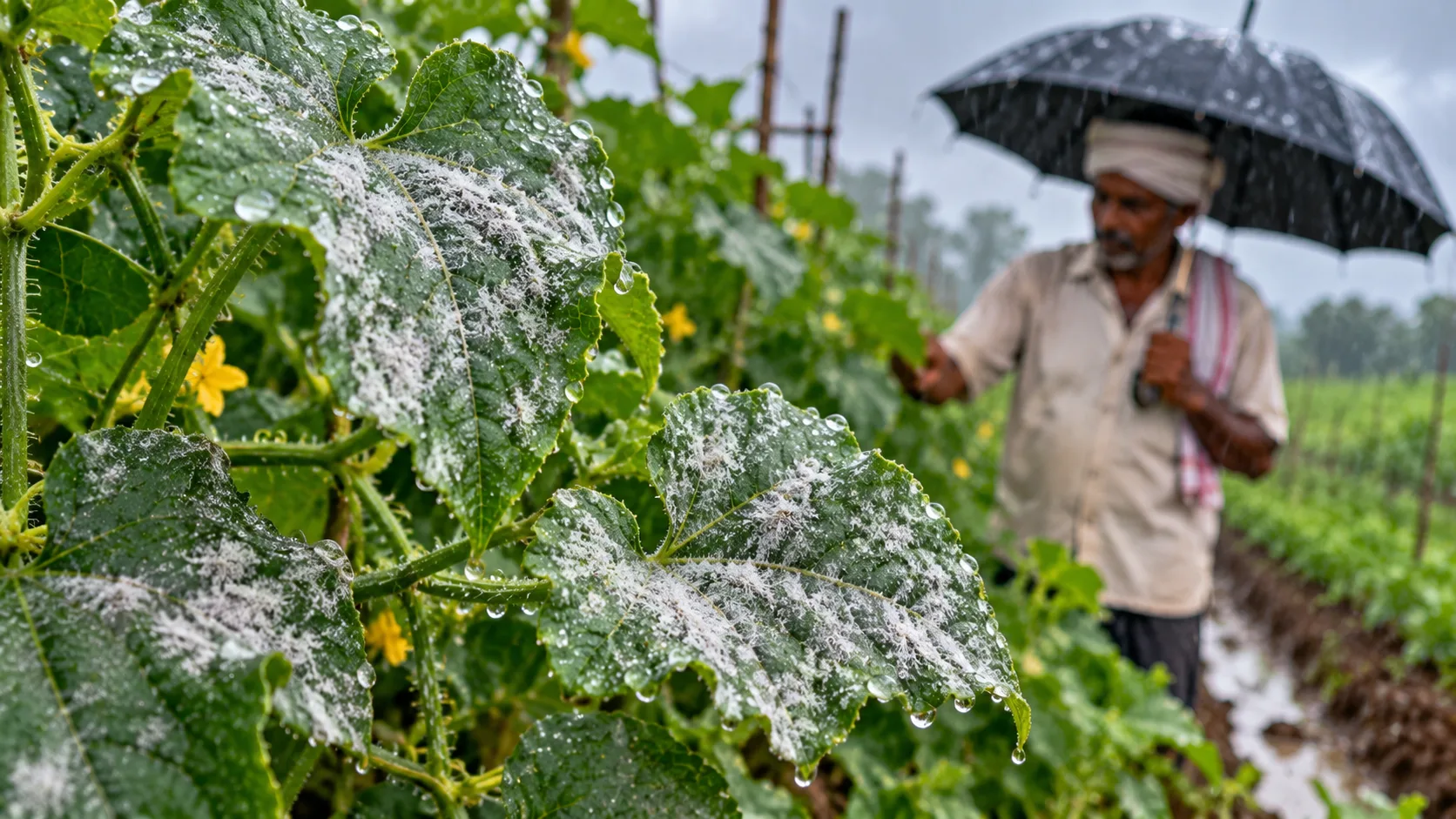
  • Fungal Disease Prevention in Monsoon Crops

    Fungal Disease Prevention in Monsoon Crops

    Monsoon brings humid air, long leaf wetness and cool nights. These are the conditions in which many fungal diseases, such as powdery mildew, downy mildew, blights and leaf spots, spread fastest. A little preparation before the rains can save a lot of effort later.

    Common signs of fungal disease

    • White or grey powdery patches on leaves, stems or flowers.
    • Yellow patches on the upper leaf with greyish growth underneath.
    • Brown or black spots that grow and join together.
    • Leaves that dry up and fall early, and fruits that rot or show spots.

    Why monsoon increases the risk

    Spores spread through rain splash, wind and wet leaves. Dense crops, poor drainage and shade keep leaves wet for longer, which gives the fungus more time to infect.

    Preparation before and during the rains

    • Keep drainage channels open so that water does not stand in the field.
    • Maintain proper spacing and prune or train crops such as vegetables to improve air flow.
    • Use disease-free seed and treat seed where recommended.
    • Avoid overhead irrigation late in the evening.
    • Remove and destroy badly infected leaves and plant debris.
    • Apply nitrogen in balanced amounts; too much produces soft growth that is more prone to disease.

    Scouting

    Check the crop every few days, especially the underside of leaves and the lower canopy. The first spots usually appear on lower leaves. Acting at the first signs is much easier than controlling an established infection.

    Using fungicides

    • Choose a fungicide registered for your crop and the disease you see.
    • Contact fungicides protect the leaf surface and work best when applied before or at the very start of infection; some products also move inside the plant.
    • Rotate between fungicide groups to avoid resistance.
    • Avoid spraying just before heavy rain, and follow the label for dose and waiting period before harvest.

    Need help choosing? Browse our fungicides range or call or WhatsApp our team with your crop and symptoms.

    This guide is for general awareness. Always read the product label, follow the dose and safety instructions printed on it, and check with your local agriculture officer or Krishi Vigyan Kendra before spraying.

  • Buying Agri Inputs Online Safely in India

    Buying Agri Inputs Online Safely in India

    Ordering agri inputs online is convenient, but pesticides are regulated products. Selling and buying them safely depends on a few checks that take only minutes.

    Before you order

    • Check that the seller is a licensed pesticide dealer and shows the licence details on the website.
    • Make sure the product is registered for use in India and is meant for your crop.
    • Read the product page for the active ingredient, formulation, pack size and uses.
    • Compare the price with the printed MRP on the pack.
    • Read the shipping, return and refund policy.

    When the parcel arrives

    • Open and check the parcel in front of the delivery person if possible.
    • Confirm that packs are sealed and not leaking.
    • Check batch number, manufacturing and expiry dates.
    • Match the product with what you ordered.
    • Keep the bill and the label photo for future reference.

    Cash on delivery

    Cash on delivery lets you pay only after receiving the order. Always keep the receipt, and report any damaged or wrong product to the seller quickly through the contact details on the website.

    Red flags

    • No licence or seller details on the website.
    • Products with no label, or with a torn or unreadable label.
    • Prices far below the market rate.
    • Claims that a product will give a guaranteed result.

    Questions about an order? Visit our FAQ page or talk to our team.

    Your rights as an online buyer

    Under India Consumer Protection (E-Commerce) Rules, 2020, online sellers must show their business name, address and contact details, publish return and refund terms and provide a grievance contact. If any of this is missing, treat it as a warning sign.

    Questions to ask the seller

    • Do you hold a valid pesticide dealer licence, and can I see the number?
    • Is this product registered and meant for my crop?
    • What are the batch and expiry dates on the stock you will send?
    • How long does delivery take to my area?
    • How can I return a damaged or wrong item?

    Keep records

    Save the order confirmation, bill and photos of the labels and batch numbers. If there is any problem, these records help you and the seller resolve it quickly.

    Storing products at home

    • Keep pesticides in their original packs in a locked place.
    • Store away from food, water, seeds, animals and children.
    • Do not store in direct sunlight or near heat.

    Frequently asked questions

    Is it legal to buy pesticides online in India?

    Online sale is permitted when the seller holds the required licence and sells registered products, as set out by the Insecticides Act and rules. Always check the seller and the product.

    Is cash on delivery safer than paying in advance?

    COD lets you inspect the parcel before paying, but you should still check the label, batch and expiry before accepting.

    What if the product looks different from the photo?

    Do not use it. Contact the seller with photos of the pack and label and ask for a return or replacement as per their policy.

    This guide is for general awareness. Always read the product label, follow the dose and safety instructions printed on it, and check with your local agriculture officer or Krishi Vigyan Kendra before spraying.
  • Plant Growth Regulators: What They Are and Uses

    Plant Growth Regulators: What They Are and Uses

    Plant growth regulators, often called PGRs, are substances that change how a plant grows, flowers or sets fruit. They are used in very small quantities and only for a specific purpose.

    What PGRs can do

    • Encourage or manage flowering in some fruit crops.
    • Reduce flower and fruit drop at certain stages.
    • Support rooting of cuttings.
    • Control excessive vegetative growth.

    Common examples

    Different PGRs act in different ways. Some are used to regulate flowering in fruit trees such as mango, some to reduce fruit drop, and others to influence shoot or root growth. The right choice depends on the crop, variety, age of the plant and local conditions.

    Important points

    • A PGR is not a substitute for balanced nutrition, irrigation and pest management.
    • Timing and dose matter a lot. Too much or at the wrong stage can reduce yield instead of improving it.
    • Recommendations differ by region and variety, so follow the label and advice from your state agriculture university or local agriculture officer.
    • Do not mix with other products unless the label allows.

    Choosing a product

    Check that the product is registered for your crop and read the purpose on the label. If you are unsure, send us the crop name, age and what you want to manage, and our team will help you find the right information.

    Browse our full product range or contact us for guidance.

    Main groups of plant growth regulators

    • Auxins: influence rooting, fruit set and fruit drop in some crops.
    • Gibberellins: influence stem and fruit growth and flowering in certain crops.
    • Cytokinins: influence cell division and shoot growth.
    • Ethylene-related products: used to influence ripening or flowering in some crops.
    • Growth retardants: slow vegetative growth so that the plant puts more effort into flowers and fruit in certain crops.

    Where farmers commonly use them

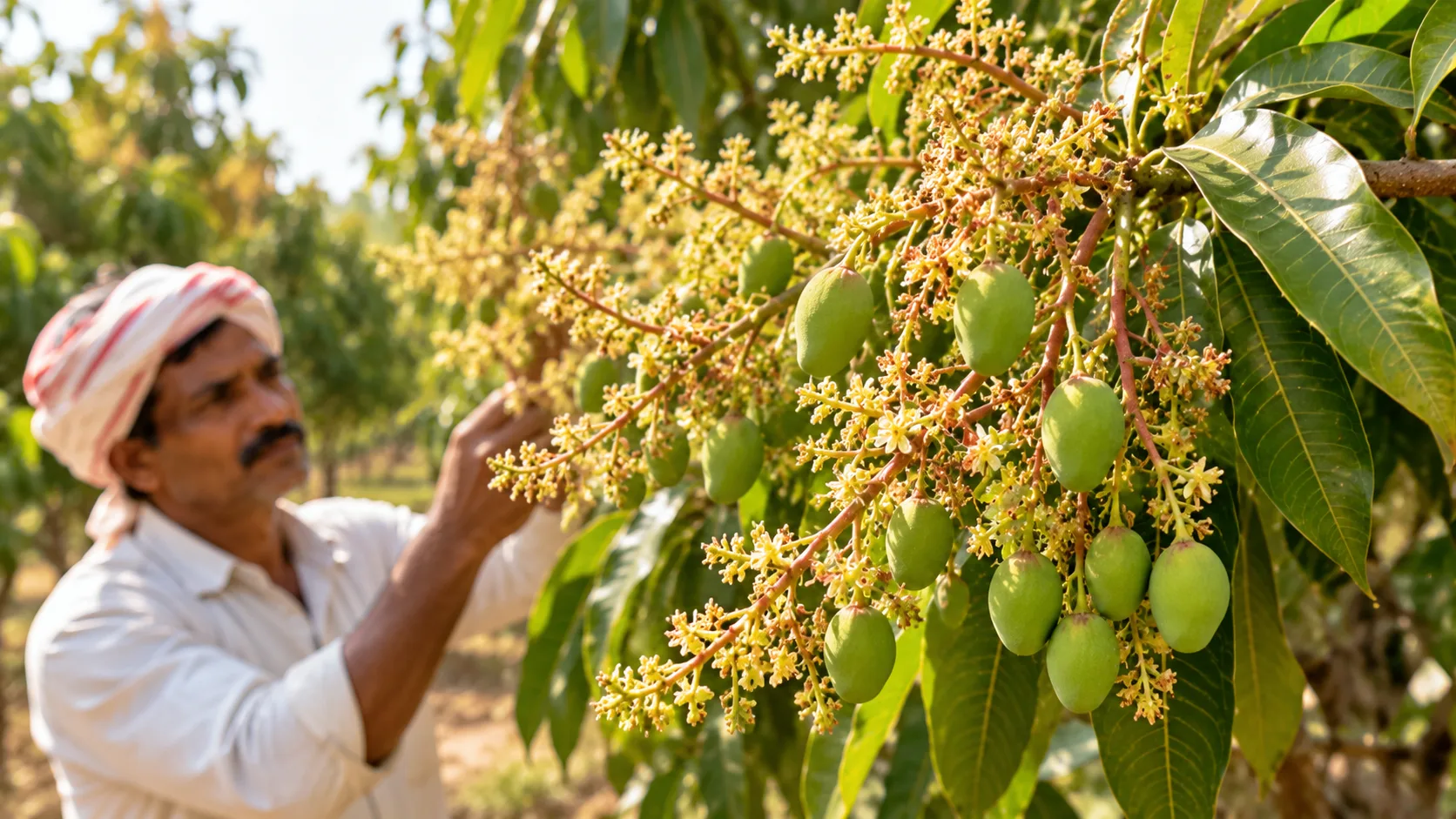
    PGRs are used in fruit trees, vegetables, grapes, sugarcane, cotton and ornamental plants for purposes such as flowering management, reducing flower or fruit drop and improving fruit size. Not every crop needs them, and results depend on variety, age, weather and soil.

    Risks of wrong use

    • Too high a dose can stunt the plant or reduce yield.
    • Wrong timing can fail to give the effect you want or disturb the crop cycle.
    • Repeated use without good nutrition and irrigation can weaken the plant over time.
    • Some products leave residues, so respect the label and the waiting period.

    Questions to ask before buying

    • Is the product registered for my crop?
    • At which growth stage should it be applied?
    • How much water per acre and how often?
    • Can it be mixed with fertiliser or pesticide?

    Frequently asked questions

    Is a PGR the same as a fertiliser?

    No. A fertiliser supplies nutrients; a growth regulator changes how the plant grows or responds.

    Can I use a PGR on every crop?

    No. Each product is registered for particular crops and purposes. Use it only as the label directs.

    Who can help me decide?

    Your nearest Krishi Vigyan Kendra, state agriculture university or local agriculture officer can advise on timing and dose for your crop and region.

    This guide is for general awareness. Always read the product label, follow the dose and safety instructions printed on it, and check with your local agriculture officer or Krishi Vigyan Kendra before spraying.
  • How to Read a Pesticide Label Correctly

    How to Read a Pesticide Label Correctly

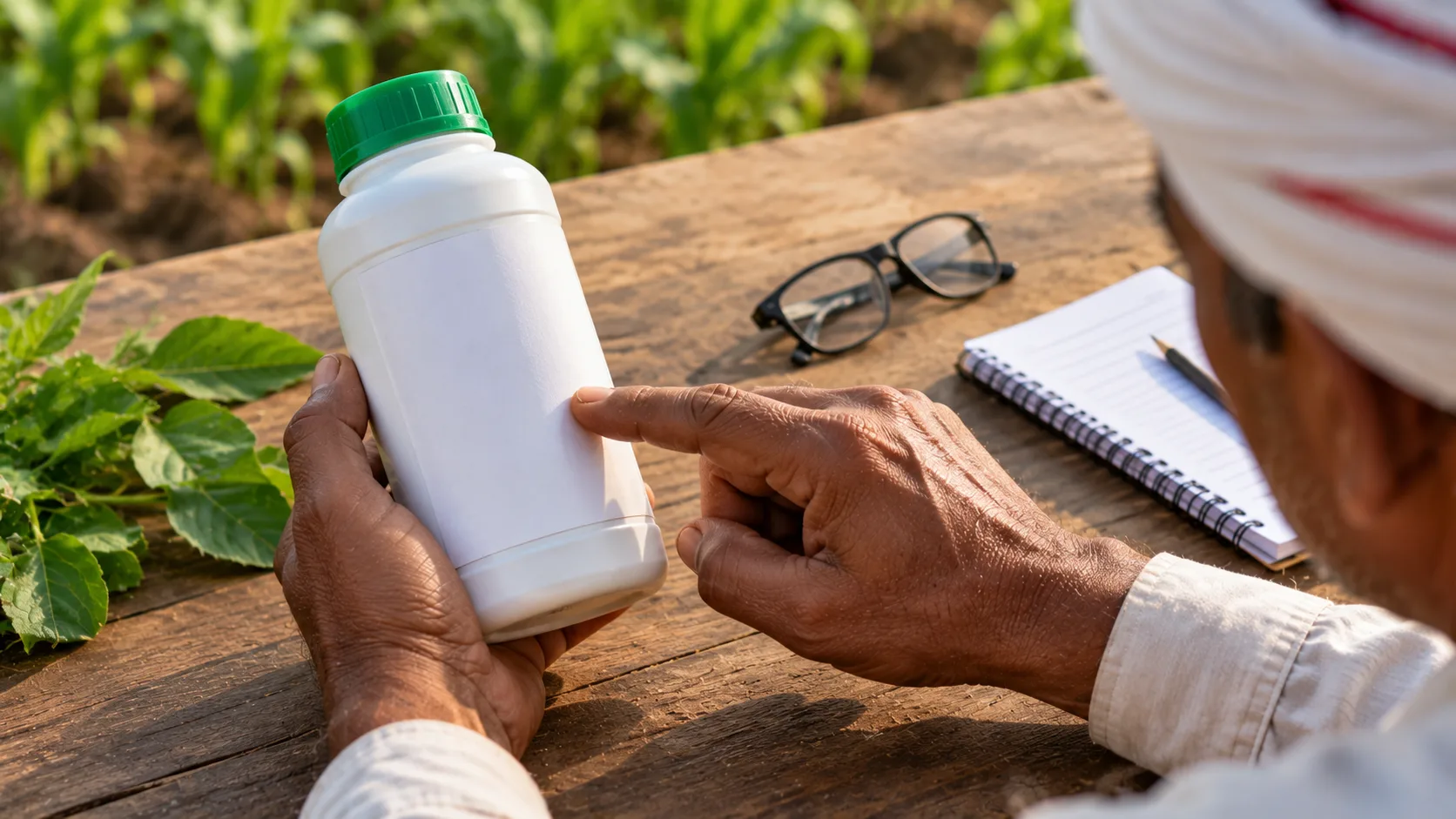
    The label on a pesticide pack is a legal document and your main safety guide. Taking two minutes to read it before every purchase and every spray can prevent mistakes.

    The colour triangle

    Pesticide packs carry a coloured triangle that shows the toxicity class of the product:

    • Red: extremely toxic.
    • Yellow: highly toxic.
    • Blue: moderately toxic.
    • Green: slightly toxic.

    What else should be on the label

    • Brand name, active ingredient and its percentage.
    • Formulation type, for example EC, SC, WP or SL.
    • Registration details from the Central Insecticides Board.
    • Batch number, manufacturing date and expiry date.
    • Net quantity and the manufacturer name and address.
    • Crops and pests the product is registered for, dose and method of use.
    • Safety precautions, symptoms of poisoning and first-aid steps.
    • Waiting period before harvest.

    Check before you buy

    • The pack is sealed, with no leaks or torn labels.
    • The expiry date is far enough away for your use.
    • The label is clear and in a language you can read.
    • You receive a proper bill with the seller details.

    Never do this

    Do not use a product on a crop that is not listed on its label, and do not increase the dose in the hope of a faster result. A higher dose can damage the crop, harm beneficial insects and increase residue on produce.

    Need help choosing? Browse our products by category or call or WhatsApp our team with your crop and the problem you are seeing.

    Understanding formulation codes

    Labels use short codes for the formulation type. These codes tell you how the product mixes with water and how to handle it:

    • EC: emulsifiable concentrate, a liquid that forms a milky mixture in water.
    • SC: suspension concentrate, a thick liquid with fine solid particles.
    • WP: wettable powder, mixed into water to form a suspension.
    • SL: soluble liquid, which dissolves in water.
    • WG or WDG: water-dispersible granules.

    Waiting period and re-entry

    The waiting period (also called pre-harvest interval) is the minimum number of days between the last spray and harvest. The re-entry period is the time before people can safely return to the sprayed field. Both are shown or explained on the label or leaflet.

    Signs of a doubtful pack

    • Spelling mistakes, blurred print or a label that peels easily.
    • No batch number or expiry date.
    • Loose caps, broken seals or leaking packs.
    • A very different colour or smell from what you know of the product.
    • A price far lower than the market rate.

    Keep the label after you use the product

    Take a photo of the label and keep the bill. If someone falls ill after exposure, the label tells the doctor what the person was exposed to.

    Frequently asked questions

    Where do I find the registration number?

    It is printed on the label, usually near the manufacturer details, together with the batch number and dates.

    What does the colour of the triangle mean?

    It shows the toxicity class: red extremely toxic, yellow highly toxic, blue moderately toxic and green slightly toxic.

    Can I use a product on a crop not listed on the label?

    No. Use it only on the crops, pests and doses mentioned on the label.

    This guide is for general awareness. Always read the product label, follow the dose and safety instructions printed on it, and check with your local agriculture officer or Krishi Vigyan Kendra before spraying.
  • Safe Pesticide Spraying: PPE, Wind and Timing

    Safe Pesticide Spraying: PPE, Wind and Timing

    Most spraying accidents happen because of small shortcuts. A few simple habits protect you, your family and the crop.

    Before you spray

    • Read the label fully, including the dose, crops allowed and waiting period.
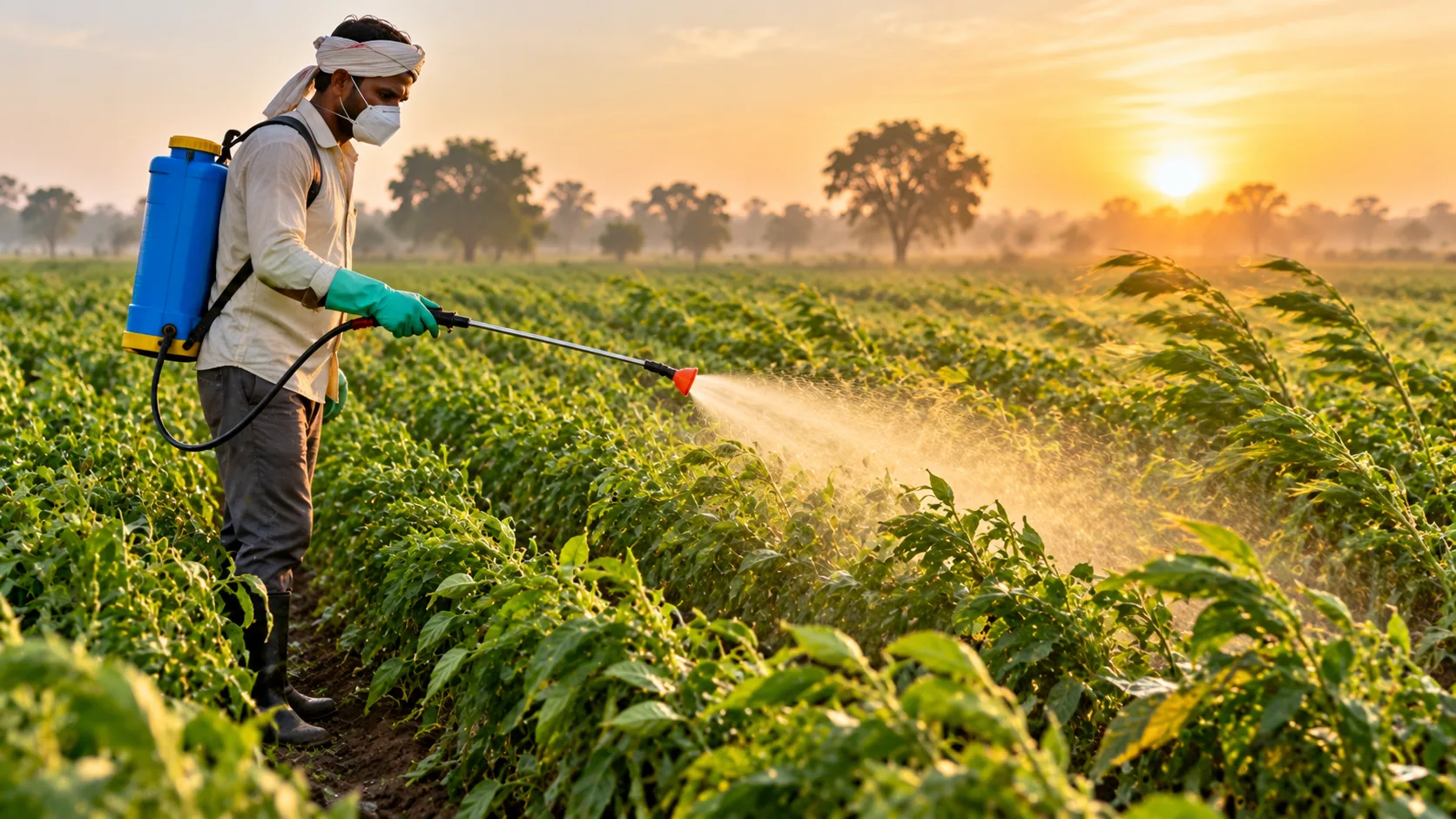
    • Wear a mask or respirator, gloves, boots, a full-sleeve shirt and long trousers.
    • Check the sprayer for leaks and make sure the nozzle is clean.
    • Measure the dose accurately with a proper measuring cup; do not guess.

    Wind and timing

    • Spray in the early morning or evening, not in the heat of the day.
    • Spray with the wind at your back so that mist does not blow towards you.
    • Do not spray in strong wind or if rain is expected soon.
    • Keep children, animals and bystanders away from the field.

    While spraying

    • Do not eat, drink, smoke or chew tobacco.
    • If your clothes get wet with the mixture, change them and wash your skin with soap and water.
    • Never blow into a clogged nozzle with your mouth.

    After spraying

    • Wash your hands, face and body, and wash the clothes separately.
    • Rinse empty containers three times, puncture them, and dispose of them safely; never reuse them for food or water.
    • Store pesticides in their original containers, locked and away from children, food and feed.
    • Respect the re-entry period and the waiting period before harvest.

    If someone feels unwell

    Move the person to fresh air, remove contaminated clothing, wash the skin, and take the person and the product label to a doctor immediately. You can also call the National Poisons Information Centre (AIIMS, New Delhi) on 1800-116-117.

    Look after your equipment

    • Check hoses, seals and nozzles before each season and replace worn parts.
    • Calibrate the sprayer so you know how much water you apply per acre.
    • Use clean water and avoid mixing in the same container used for drinking or cooking.
    • After spraying, wash the sprayer in a place away from wells, ponds and animals.

    Mixing and handling

    • Open packs carefully and measure with a dedicated cup or cylinder.
    • Mix in a ventilated area, never in a closed room.
    • Follow the label for the order of mixing if you are allowed to tank-mix.
    • Never taste, smell or touch the chemical.

    Care of protective gear

    Wash gloves, boots and clothing after each use and keep them away from household laundry and food. Replace masks and filters as recommended, and discard gloves that are torn or cracked.

    Storage and disposal

    • Keep pesticides in their original packs with the label intact.
    • Store them locked, away from food, feed, seeds and children.
    • Do not reuse empty containers; rinse them three times, puncture them and give them to a proper collection point if one exists in your area.

    Common mistakes to avoid

    • Increasing the dose to get a faster result.
    • Spraying against the wind.
    • Eating or smoking during the work.
    • Returning to the field before the re-entry period has passed.

    Frequently asked questions

    Is it safe to spray before rain?

    No. Rain soon after spraying can wash the product off and reduce control. Follow the rainfast information on the label.

    What is the best time of day to spray?

    Early morning or late afternoon, when it is cooler and the wind is lighter.

    Can women and children help with spraying?

    No. Pregnant and breastfeeding women and children should stay away from mixing and spraying areas.

    This guide is for general awareness. Always read the product label, follow the dose and safety instructions printed on it, and check with your local agriculture officer or Krishi Vigyan Kendra before spraying.
  • Aphids, Jassids and Whiteflies: Sucking Pest Guide

    Aphids, Jassids and Whiteflies: Sucking Pest Guide

    Aphids, jassids (leafhoppers) and whiteflies feed by sucking sap from leaves and tender shoots. They are small and often hide under the leaf, so many farmers notice them only after the plants look weak.

    How to recognise them

    • Aphids: soft, small insects in clusters on new growth and under leaves, often green or black.
    • Jassids: small green, wedge-shaped insects that walk sideways; leaf edges turn yellow and then brown and curl.
    • Whiteflies: tiny white flying insects that rise when you shake the plant.

    Damage to watch for

    • Curling, yellowing or crinkled leaves.
    • Sticky honeydew and black sooty mould on leaves.
    • Stunted growth and fewer flowers.
    • Whiteflies can also spread leaf curl and other viral diseases.

    Practices that help

    • Check the underside of leaves every few days.
    • Use yellow sticky traps to monitor and catch adults.
    • Remove weeds and alternate host plants near the field.
    • Avoid excess nitrogen, which produces soft growth that these pests prefer.
    • Encourage natural enemies such as ladybird beetles by avoiding unnecessary sprays.

    Using insecticides

    When numbers are high, choose a product registered for your crop and the pest. Rotate between insecticide groups, cover the underside of leaves while spraying, and follow the label for dose and waiting period.

    Need help choosing? Browse our insecticides range or call or WhatsApp our team with your crop and the problem you are seeing.

    Life cycles and spread

    • Aphids reproduce very fast in cool, dry weather and may produce winged forms that move to new plants.
    • Jassids lay eggs in leaf veins and both nymphs and adults suck sap, causing leaf-edge yellowing, browning and curling called hopper burn.
    • Whiteflies lay eggs on the underside of leaves and their immature stages stay attached to the leaf; adults fly up when disturbed.

    Virus risk

    Whiteflies and some aphids carry plant viruses such as leaf curl and mosaic. Once a plant is infected, spraying cannot cure the virus, so early control of the insect and removal of infected plants is important.

    Resistance management

    These pests can become resistant when the same insecticide group is used repeatedly. Rotate between groups with different modes of action, use only the label dose and avoid mixing products unless the label permits it.

    Helpful natural enemies

    Ladybird beetles, lacewings and small parasitic wasps feed on or parasitise these pests. Protect them by avoiding unnecessary sprays and by keeping flowering plants on field borders.

    Common mistakes to avoid

    • Checking only the top of the leaf.
    • Spraying in the hottest part of the day.
    • Over-fertilising with nitrogen.
    • Leaving weeds that host the pests.

    Frequently asked questions

    What is the sticky layer on my leaves?

    It is honeydew, a sugary waste produced by aphids, whiteflies and some hoppers. Black sooty mould often grows on it.

    Are yellow sticky traps useful?

    Yes, they help monitor whiteflies, aphids and jassids and catch adults, but they do not replace other measures.

    Can neem-based products help?

    Neem-based products are used as part of pest management. Use only registered products and follow the label.

    This guide is for general awareness. Always read the product label, follow the dose and safety instructions printed on it, and check with your local agriculture officer or Krishi Vigyan Kendra before spraying.

Login / Sign Up

Enter your mobile number to continue — no email needed.

+91

We only use your mobile number. No email or password required.

Just a few details to set up your farmer profile. No email needed.

🌱
Green Agro Mart
Typically replies in a few minutes
Hi there! Welcome to Green Agro Mart. How can we help you today?