
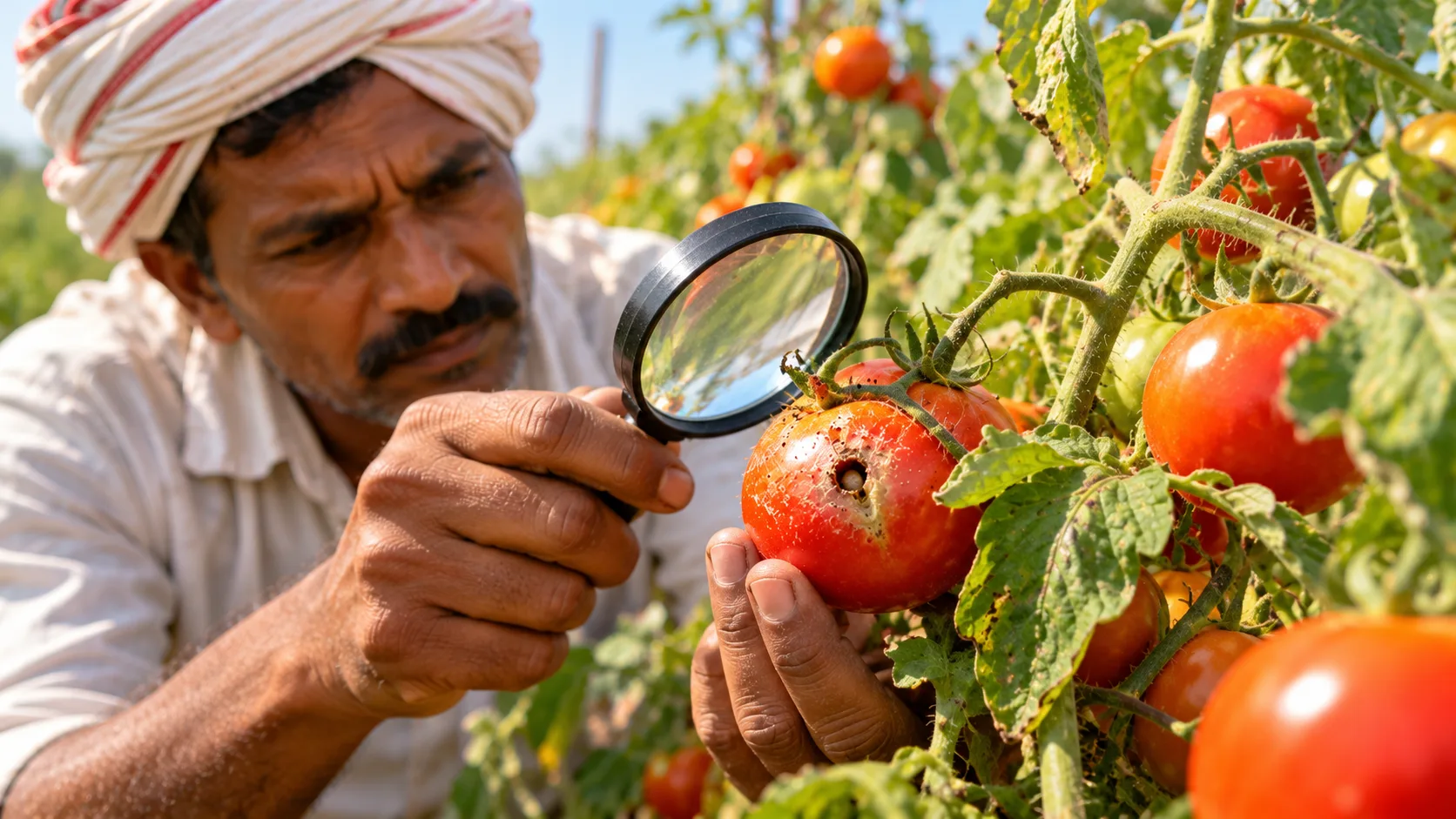
Tomato fruit borer, caused by the larvae of a moth, is a major pest in tomato fields across India. A single larva can damage several fruits, so catching it early matters.
Signs of fruit borer
- Round entry holes on green or ripening fruit.
- Droppings (frass) near the hole and rotting inside the fruit.
- Chewed flowers and young leaves.
- Small eggs laid singly on leaves, buds or flowers.
Scouting
Walk the field every few days, looking under leaves and inside flower clusters. Pheromone traps help you know when moths arrive so that you can plan your sprays and hand-picking.
Practices that reduce damage
- Install pheromone traps and replace lures on schedule.
- Grow a border of marigold as a trap crop.
- Pick and destroy damaged fruits and visible larvae.
- Rotate with non-host crops and avoid growing tomato after tomato or chilli.
- Keep the field free of weeds that shelter the pest.
Wilt is a different problem
If whole plants wilt even when the soil is moist, the cause is usually a soil-borne or bacterial disease and not the fruit borer. Check roots and the stem base before choosing any treatment.
Using insecticides
Use only products registered for tomato, respect the waiting period before harvest, and rotate insecticide groups. Spraying in the evening usually works better and is safer for beneficial insects.
Need help choosing? Browse our insecticides range or call or WhatsApp our team with your crop and the problem you are seeing.
The pest life cycle
Moths lay single eggs on leaves, buds and flowers. Small larvae first feed on leaves and flowers and then bore into fruits, moving from one fruit to another as they grow. After feeding, they pupate in the soil near the plant. Several generations occur in a season in warm weather.
Cultural methods that reduce pressure
- Deep ploughing after harvest exposes pupae to sunlight and natural enemies.
- Staking and training plants improves air flow and makes scouting easier.
- Collect and destroy damaged fruits and fallen fruits away from the field.
- Rotate with cereals or other non-host crops instead of tomato, chilli, okra, cotton or chickpea in the same plot.
- Plant marigold rows as a trap crop and inspect them for eggs and larvae.
Natural enemies
Parasitic wasps and predators such as ladybird beetles help hold the pest in check. Spraying broad-spectrum products unnecessarily can remove these helpers, so spray only when scouting shows it is needed.
Common mistakes to avoid
- Confusing fruit borer damage with fruit rot or sunscald.
- Spraying only the upper leaves and missing flowers and fruit clusters.
- Using the same insecticide repeatedly.
- Leaving rotten fruit lying in the field.
Frequently asked questions
Why do my tomatoes have round holes?
A single round hole with droppings nearby usually points to a fruit borer larva. Cut open the fruit to confirm.
Is bacterial wilt the same as fruit borer?
No. Wilt affects the whole plant and is caused by soil-borne or bacterial pathogens, while fruit borer damages the fruit.
Is it safe to eat damaged tomatoes?
Remove damaged and rotting fruit. Only harvest after the waiting period shown on the label of any product you have sprayed.
This guide is for general awareness. Always read the product label, follow the dose and safety instructions printed on it, and check with your local agriculture officer or Krishi Vigyan Kendra before spraying.