
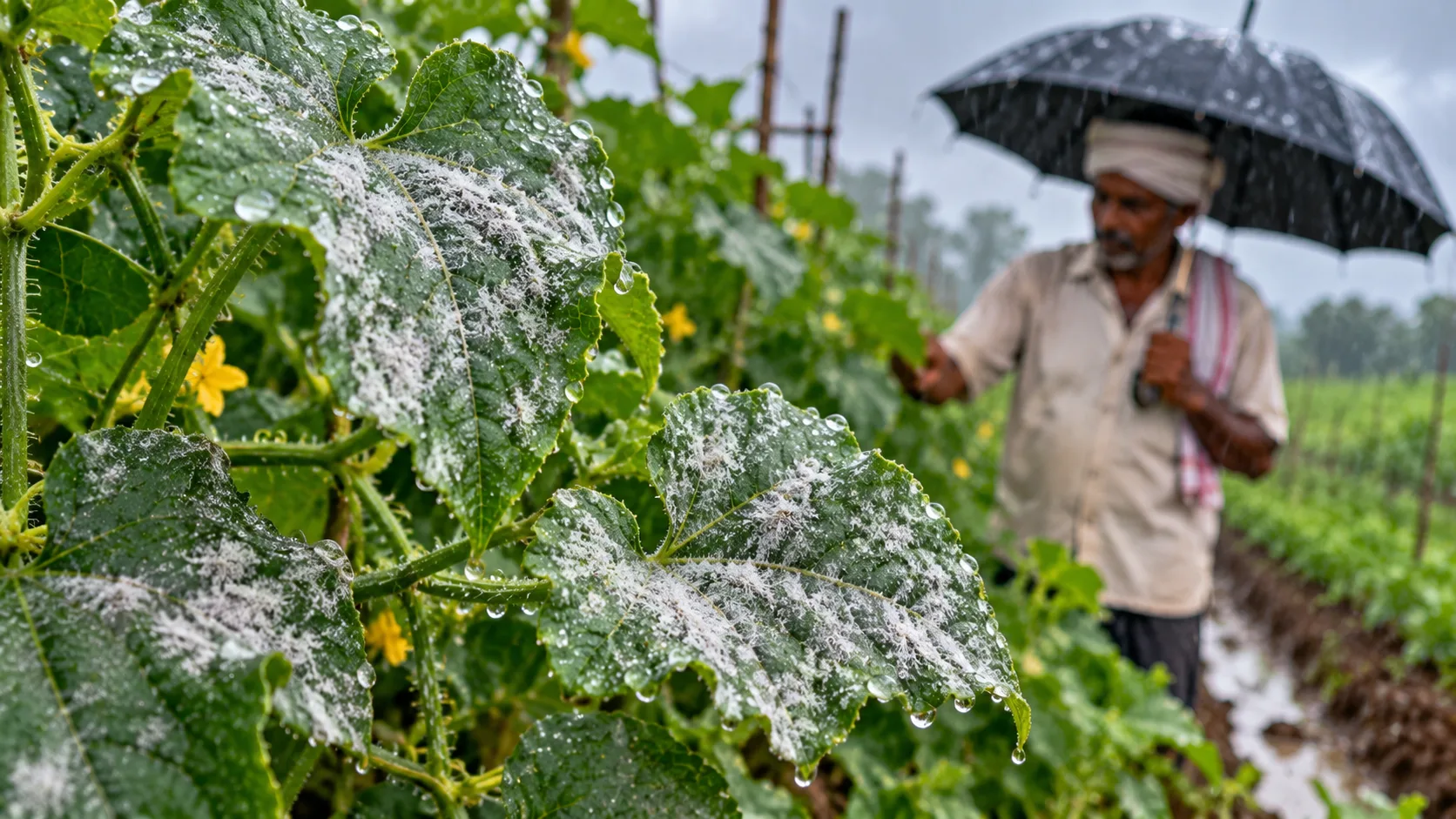
Monsoon brings humid air, long leaf wetness and cool nights. These are the conditions in which many fungal diseases, such as powdery mildew, downy mildew, blights and leaf spots, spread fastest. A little preparation before the rains can save a lot of effort later.
Common signs of fungal disease
- White or grey powdery patches on leaves, stems or flowers.
- Yellow patches on the upper leaf with greyish growth underneath.
- Brown or black spots that grow and join together.
- Leaves that dry up and fall early, and fruits that rot or show spots.
Why monsoon increases the risk
Spores spread through rain splash, wind and wet leaves. Dense crops, poor drainage and shade keep leaves wet for longer, which gives the fungus more time to infect.
Preparation before and during the rains
- Keep drainage channels open so that water does not stand in the field.
- Maintain proper spacing and prune or train crops such as vegetables to improve air flow.
- Use disease-free seed and treat seed where recommended.
- Avoid overhead irrigation late in the evening.
- Remove and destroy badly infected leaves and plant debris.
- Apply nitrogen in balanced amounts; too much produces soft growth that is more prone to disease.
Scouting
Check the crop every few days, especially the underside of leaves and the lower canopy. The first spots usually appear on lower leaves. Acting at the first signs is much easier than controlling an established infection.
Using fungicides
- Choose a fungicide registered for your crop and the disease you see.
- Contact fungicides protect the leaf surface and work best when applied before or at the very start of infection; some products also move inside the plant.
- Rotate between fungicide groups to avoid resistance.
- Avoid spraying just before heavy rain, and follow the label for dose and waiting period before harvest.
Need help choosing? Browse our fungicides range or call or WhatsApp our team with your crop and symptoms.
This guide is for general awareness. Always read the product label, follow the dose and safety instructions printed on it, and check with your local agriculture officer or Krishi Vigyan Kendra before spraying.